

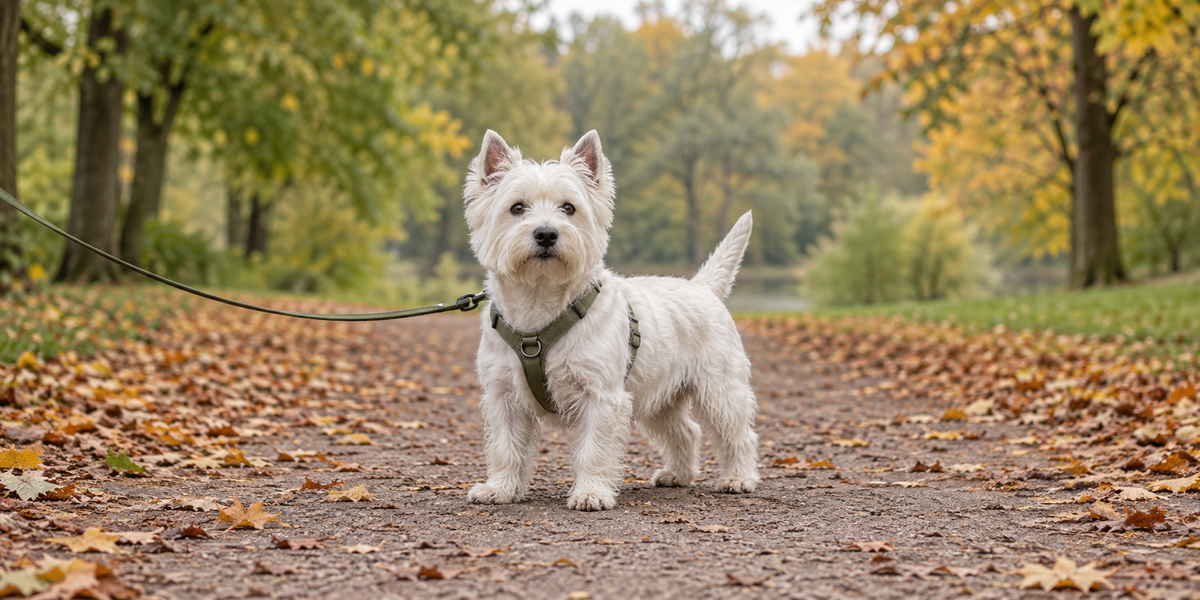
A Westie can happily investigate every hedge in the morning and lie contentedly beside you in the evening. For both to work together, it needs a daily routine with exercise, small tasks and rest. Its white coat makes it unmistakable, but it says little about what the dog needs.
Das Video dazu
Mit Klick lädst du das Video von YouTube. Dabei werden Daten an YouTube (Google) übertragen. Datenschutz
The West Highland White Terrier is a small, self-assured terrier. The Royal Kennel Club describes it as alert, happy and independent. For you, that means: plan time for learning together, and decide based on the everyday life you can offer. Source: Royal Kennel Club breed standard.
Does a Westie suit a flat and a family?
A flat can work if walks and activities are a reliable part of the day. Even a garden does not replace this time together. When living with children, what counts is the individual dog, its life so far and respectful handling. Do not leave a dog and small children together unsupervised. Westies were bred as hunting dogs: small pets in the household need special attention and a secure separation. Source: PDSA breed profile.
Before you decide, make a weekly plan: Who goes out in the morning? Who steps in if a working day runs long? Where can the dog sleep undisturbed? Factor in grooming, training and vet costs as well. A sample plan with fixed responsibilities shows you more quickly than a breed description whether a dog fits into your life right now.
Walks: sniffing is part of it
Plan several outings a day on which your Westie can also explore its surroundings. How long and demanding they should be depends on age, health and fitness. A rigid number of minutes does not replace that assessment.
For the next walk you can set yourself three simple tasks: a quiet stretch for sniffing, an easy exercise your dog already knows, and a relaxed way home. You do not have to work through a training programme on the way. Rather, watch whether your dog is still responsive, and choose a quieter route when it is busy.
Practise recall before the distractions get big
An interesting scent can matter a great deal to a terrier. So build up recall in small steps. Blue Cross recommends starting close to the dog and without distractions, and only increasing the difficulty after reliable successes.
- Choose a signal that everyone in the household uses in the same way, for example “Here”. Start at home over a short distance.
- Call in a friendly way and reward your dog as soon as it reaches you. Use food it tolerates or a game it enjoys.
- Outdoors, practise at quiet places first. A longer training lead belongs on a well-fitting harness; keep away from roads.
- If it does not come, do not keep repeating the signal. Calmly secure the situation and then practise something easier again. Do not scold it if it does eventually arrive.
Also call it occasionally, reward it and let it carry on exploring. That way, coming back does not mean the end of the walk every time. Off-lead time only comes into question once recall, surroundings and local rules allow it. Source: Blue Cross, recall training.
Grooming: small routines instead of big battles
The Westie coat consists of a harsh outer coat and a soft undercoat. This breed sheds too. Grooming therefore belongs firmly in your weekly plan. Source: Royal Kennel Club, breed profile.
Brush and comb regularly, checking the legs, belly and the areas under the harness in particular. Ask to be shown suitable tools and the right techniques. Begin with short, friendly sessions and do not force your way through matted patches. For sensitive skin or firm knots, an expert assessment helps.
A complete grooming plan also includes claws, ears and teeth. Whether hand-stripping or another kind of coat treatment makes sense is something you discuss with an experienced professional based on the actual coat. For the family dog there is no helpful blanket rule that replaces every individual situation. Source: West Highland White Terrier Club of America, grooming.
Take itching seriously
In Westies, skin allergies are among the known health problems. That does not mean every Westie is affected. Recurring itching or inflamed skin should be checked by a vet. A white coat alone proves neither an allergy nor a particular food intolerance. Source: PDSA, health risks in the Westie.
Note down for the appointment when the symptoms began and what you changed most recently. Photos of the affected areas can document how things progress. Bring the current food packaging and a list of all snacks. That way you provide concrete information instead of trying new products on a hunch.
An activity idea with food
A fillable toy can be a small task for in between. The red KONG Classic in size S on Amazon (advertisement / affiliate link) is one example that could work. It is made of natural rubber and, according to the manufacturer, is intended for average chewers. We have not tested it ourselves.
Choose the size according to your dog’s weight and muzzle size. Size S is not an automatic recommendation for every Westie. If in doubt, the manufacturer advises the larger version; particularly strong chewers may need a different material strength. Before buying, also compare the total price including shipping. Source: KONG, size and material selection.
To start, loosely fill in a little of its usual, well-tolerated food so that it can reach it easily. Stay with your dog, check the toy before every use and discard it if it is damaged. It replaces neither time together nor training.
Take the filling from the planned daily ration. Extra snacks count towards daily energy: WSAVA recommends limiting treats to less than ten percent of daily calories. If your dog is on a prescribed diet or has intolerances, clarify suitable fillings with your vet practice. Source: WSAVA, treats for dogs.
Our food calculator gives you a calculated starting value for the amount of food based on weight, body shape, activity and the energy content of the food. It does not diagnose allergies and does not put together an individual diet. If you also add rice or potatoes, our guide to factoring in side dishes will help.
Your check before deciding
- You want to go out with your dog every day and enjoy exercises together.
- Grooming and its costs have a fixed place in your weekly plan.
- You can arrange care when your day runs longer than planned.
- You are willing to get to know the individual dog instead of deciding only by breed image and coat colour.
If you can answer these points concretely, a personal meeting is worthwhile. Ask about the dog’s everyday life so far, grooming needs and known health findings. Our own video “West Highland White Terrier: So anstrengend ist die Rasse wirklich” complements the guide with an overview of character, activities and health.
Affiliate notice
This article contains one labelled Amazon affiliate link. If you buy through it, PrintMyPet may receive a commission. Your purchase price stays the same: you do not pay more because of it. As an Amazon Associate I earn from qualifying purchases.
20% of our profit goes to animal welfare. You can find out more on our animal welfare page.


